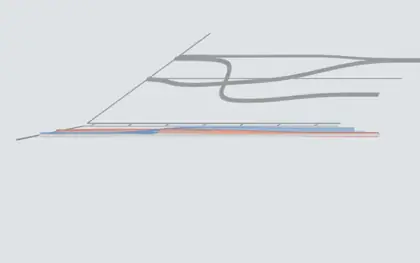
Description
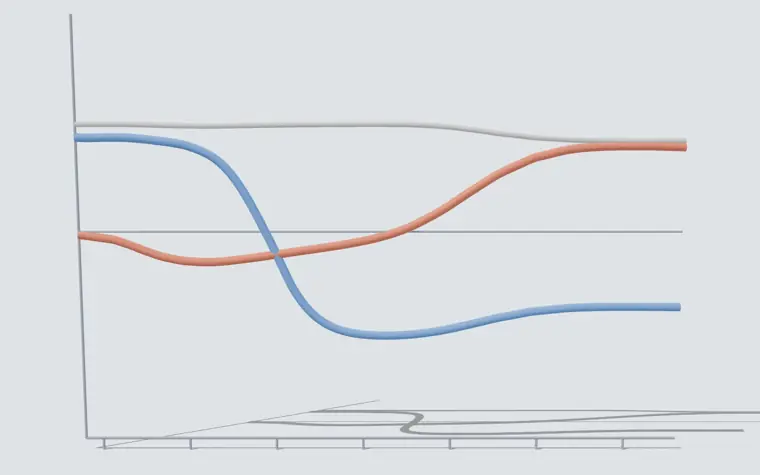
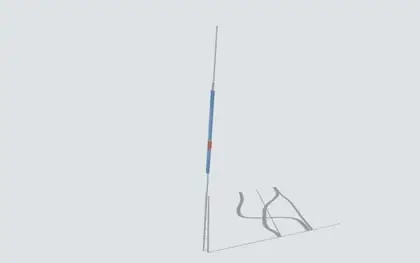
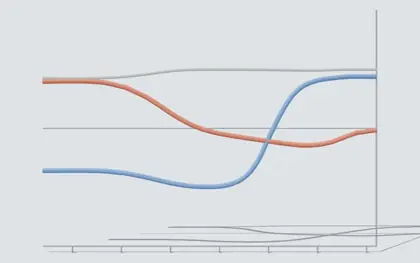
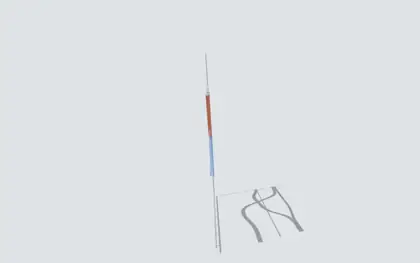
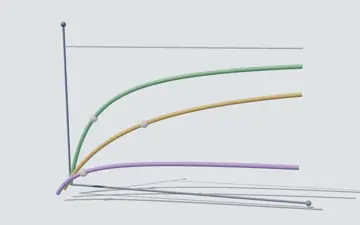
Colour opponency (also called opponent channels; red–green and blue–yellow; opponent process): The way the visual system reads colour out of the cones: by taking differences. One channel sets L against M cones, one sets S against L and M together, and one adds L and M for brightness. Size: a comparison made by nerve cells of the retina, thalamus and cortex. 3D model: custom builder "col-oppo".
Where the triangles are
Materials
- red–green signal, L − MMeshStandard · metal 0 · rough 0.4
- blue–yellow signal, S − (L + M)/2MeshStandard · metal 0 · rough 0.4
- brightness signal, L + MMeshStandard · metal 0 · rough 0.4
- wavelength, 390 to 730 nm (ticks every 50 nm from 400)MeshStandard · metal 0 · rough 0.6
Motion
No animation is defined in this model's code: its builder returns a still model, with no clips, no update function and no time-driven material. In the app the part also appears in the lab station `brain/colour`, a live simulation; a station is a scene of its own, not part of this model, and is not captured here.
Specification
| Category | Science and biology / Biological processes |
|---|---|
| Kind | Processes |
| Collection | Processes |
| Repository | LAB |
| Version kept | Cell to Quantum, current source, 2026-11-11 |
| Confidence | high |
| Runtime | threejs |
| Bounding box | 113.6 × 82.1 × 5.43 scene units |
| Draw calls | 4 |
| Code | cell-journey/src/js/80-brain-19-colour.js + 3 files |
| Built and measured | 2026-11-24, 0.0 s build, three.js r160 |
Effects
More biological processes See all 80
 Colour-vision deficiencyProcesses
 CooperativityProcesses
 CytokinesisProcesses
 Dark currentProcesses
 Diabetes mellitusProcesses
 DiffusionProcesses
 Diffusion limitProcesses
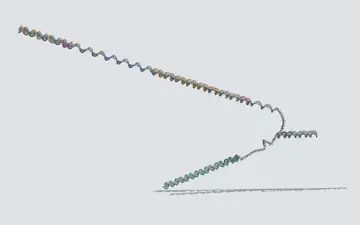 DNA replicationProcesses
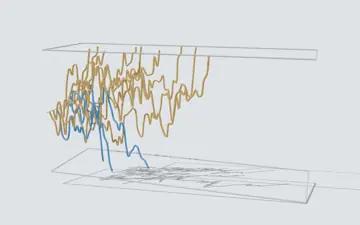 Drift–diffusion modelProcesses
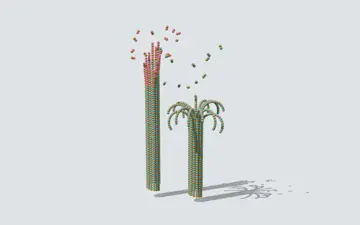 Dynamic instabilityProcesses
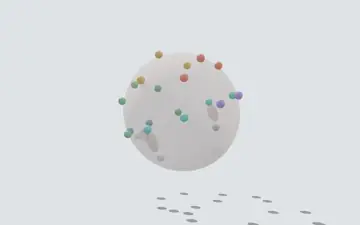 Electroencephalogram (EEG)Processes
 Enzyme inhibitionProcesses