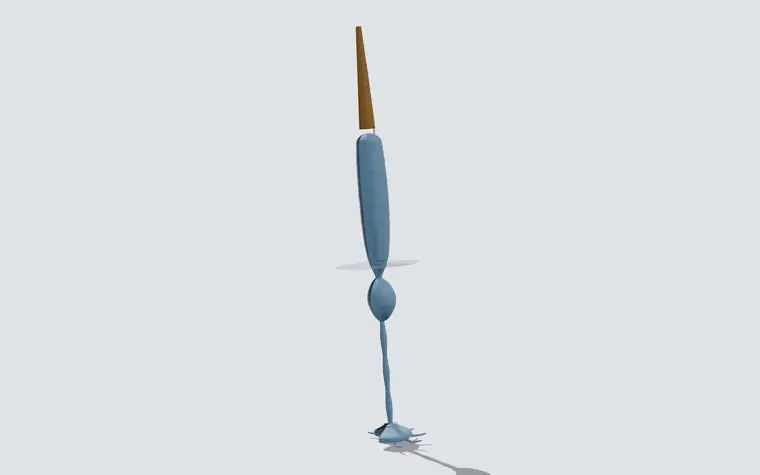
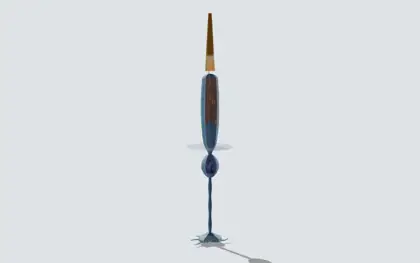
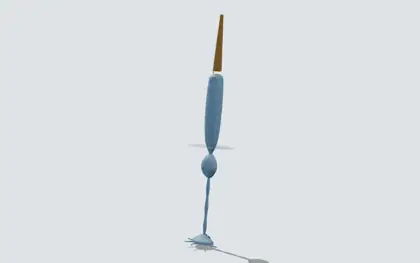
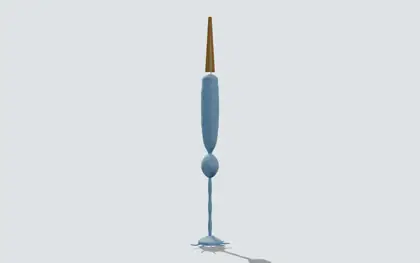
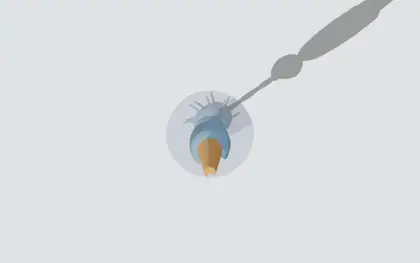
Description
Cone cell (also called cone photoreceptor; L, M and S cones): The photoreceptor of daylight and colour vision. Each cone holds one of three pigments, so it belongs to one of three classes, L, M or S; on its own it reports only how many photons it caught, never their wavelength. Size: ≈ 70–100 µm long; 2 µm wide in the fovea, up to ≈ 8 µm elsewhere. 3D model: custom builder "col-cone".
Where the triangles are
Materials
- the cone: one cell about 85 µm tall, from its light-catching tip to its synaptic foot (cut open)MeshStandard · metal 0 · rough 0.6
- outer segment, 20 µm: a stack of about 800 folds of membrane packed with opsin, one every 25 nm (every fold drawn; the number is an estimate from the length and the spacing)MeshStandard · metal 0 · rough 0.5
- the ellipsoid: hundreds of long mitochondria, powering the cell and funnelling light upwardsMeshStandard · metal 0 · rough 0.5
- nucleus, in the cell bodyMeshStandard · metal 0 · rough 0.8
- nucleus, in the cell bodyMeshStandard · metal 0 · rough 0.6
- the myoid: endoplasmic reticulum and Golgi, where opsin is made (about a tenth of the tip is renewed every day)MeshStandard · metal 0 · rough 0.6
- the cone: one cell about 85 µm tall, from its light-catching tip to its synaptic foot (cut open)MeshStandard · metal 0 · rough 0.6
- connecting cilium: a 0.3 µm stalk, the only bridge from the cell to its outer segmentMeshStandard · metal 0 · rough 0.5
- the cone: one cell about 85 µm tall, from its light-catching tip to its synaptic foot (cut open)MeshStandard · metal 0 · rough 0.5
- the cone: one cell about 85 µm tall, from its light-catching tip to its synaptic foot (cut open)MeshStandard · metal 0 · rough 0.9
And 2 more.
Motion
No animation is defined in this model's code: its builder returns a still model, with no clips, no update function and no time-driven material. In the app the part also appears in the lab station `brain/colour`, a live simulation; a station is a scene of its own, not part of this model, and is not captured here.
Specification
| Category | Science and biology / Cells, organelles and organs |
|---|---|
| Kind | Cells and organs |
| Collection | Cells and organs |
| Repository | LAB |
| Version kept | Cell to Quantum, current source, 2026-11-11 |
| Confidence | high |
| Runtime | threejs |
| Bounding box | 23.7 × 83.6 × 24.7 scene units |
| Draw calls | 12 |
| Code | cell-journey/src/js/80-brain-19-colour.js + 3 files |
| Built and measured | 2026-11-24, 0.5 s build, three.js r160 |
Effects
More cells, organelles and organs See all 101
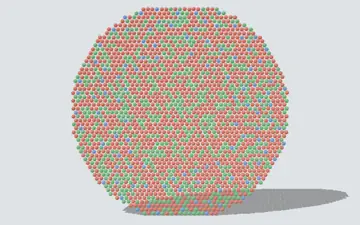 Cone mosaicCells and organs
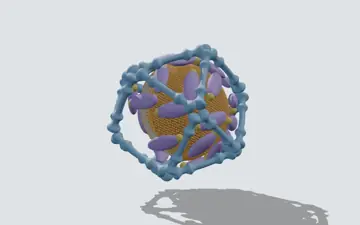 COPII vesicleCell structures
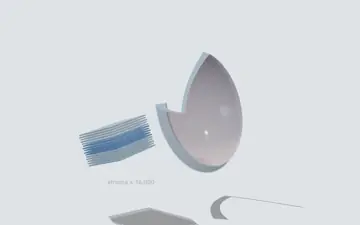 CorneaCells and organs
 Corpus callosumCells and organs
 Cortical columnCells and organs
 Cortical interneuronCells and organs
 CristaCell structures · 2 variants
 CytoplasmCell structures
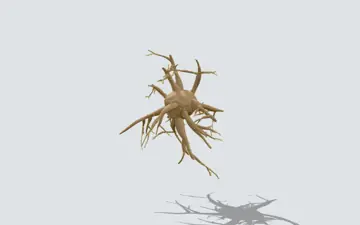 Dendritic cellCells and organs
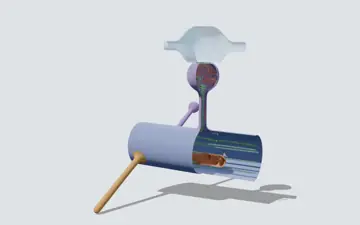 Dendritic spineCell structures
 Dopamine neuronCells and organs
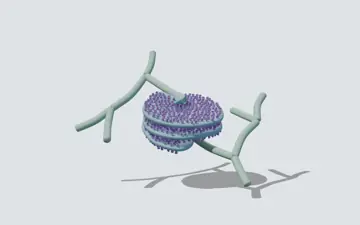 Endoplasmic reticulumCell structures