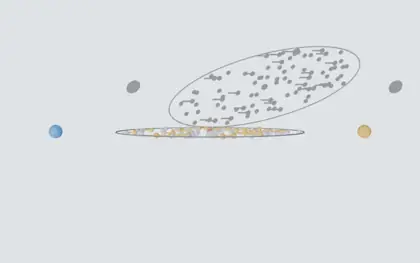
Description
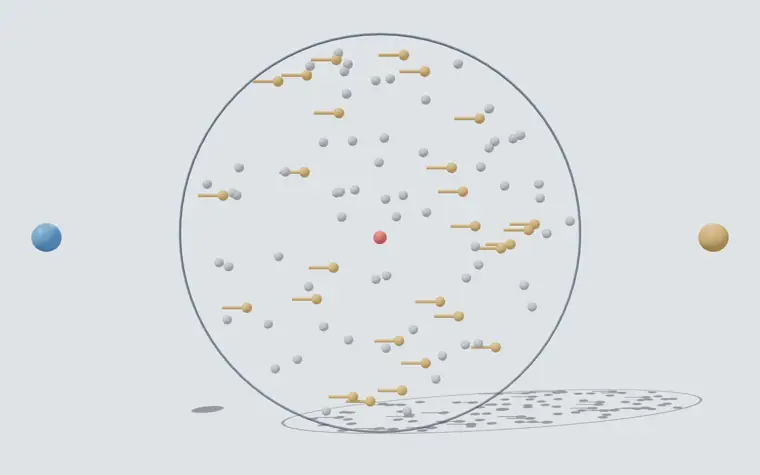
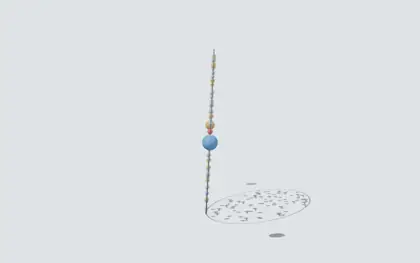
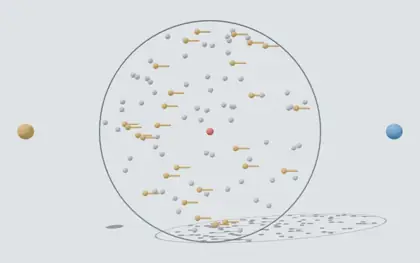
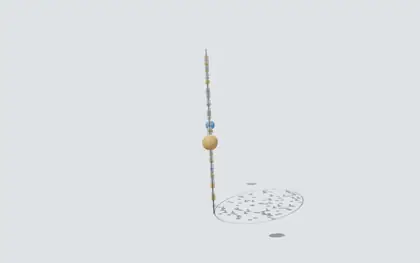
Random-dot motion display (also called random-dot kinematogram, motion coherence task): A patch of flickering dots in which a chosen fraction, the coherence, steps in one direction while the rest are replotted at random. It lets an experimenter dial the strength of a motion signal with one number. Size: a patch about 5° of visual angle across. 3D model: custom builder "rdm-display".
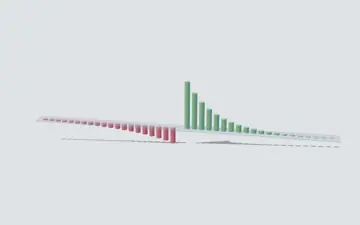
Where the triangles are
Materials
- noise dots: replotted at random placesMeshStandard · metal 0 · rough 0.35
- signal dots: all step the same way (30% here)MeshStandard · metal 0 · rough 0.35
- fixation point (red) and the two choice targetsMeshStandard · metal 0 · rough 0.4
- fixation point (red) and the two choice targetsMeshStandard · metal 0 · rough 0.4
- fixation point (red) and the two choice targetsMeshStandard · metal 0 · rough 0.4
- UnnamedMeshStandard · metal 0 · rough 0.6
Motion
No animation is defined in this model's code: its builder returns a still model, with no clips, no update function and no time-driven material. In the app the part also appears in the lab station `brain/decision`, a live simulation; a station is a scene of its own, not part of this model, and is not captured here.
Specification
| Category | Science and biology / Biological processes |
|---|---|
| Kind | Processes |
| Collection | Processes |
| Repository | LAB |
| Version kept | Cell to Quantum, current source, 2026-11-11 |
| Confidence | high |
| Runtime | threejs |
| Bounding box | 73.0 × 42.2 × 3.15 scene units |
| Draw calls | 7 |
| Code | cell-journey/src/js/80-brain-20-decision.js + 3 files |
| Built and measured | 2026-11-24, three.js r160 |
Effects
More biological processes See all 80
 Receptive fieldProcesses
 Refractive errorProcesses
 REM sleepProcesses
 Respiratory controlProcesses
 Resting membrane potentialProcesses
 Reward prediction errorProcesses
 Saltatory conductionProcesses
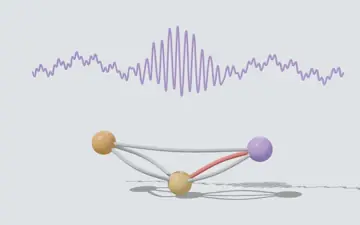 Sleep spindleProcesses
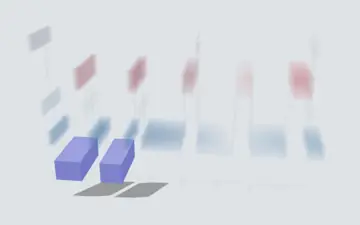 Slow-wave sleep (N3)Processes
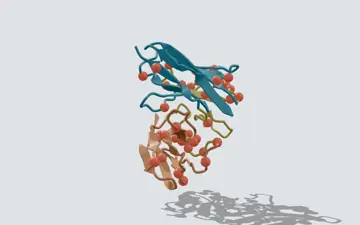 Somatic hypermutationProcesses
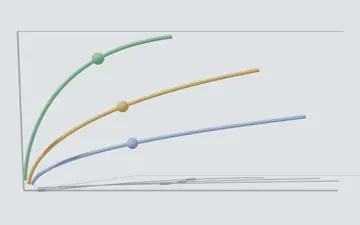 Speed–accuracy trade-offProcesses
 Spike-timing-dependent plasticity (STDP)Processes