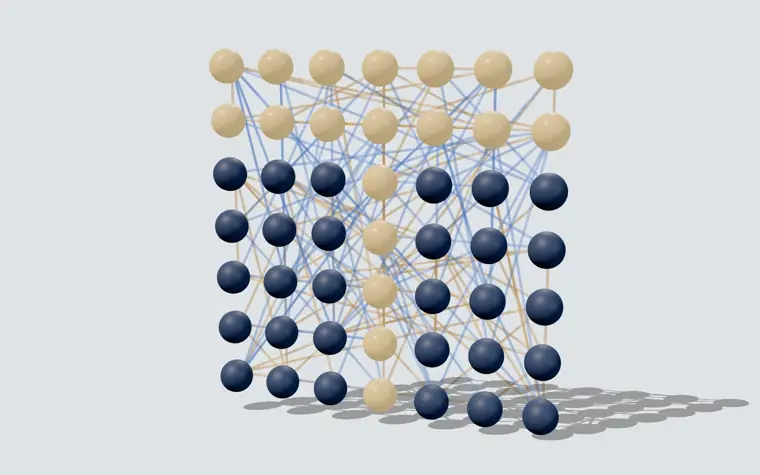
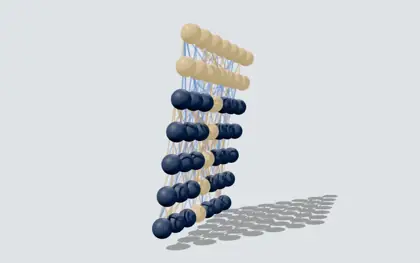
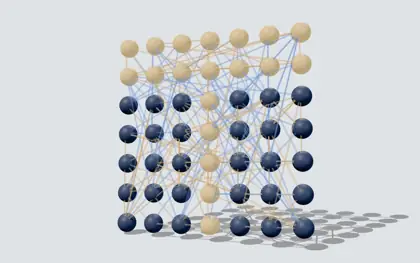
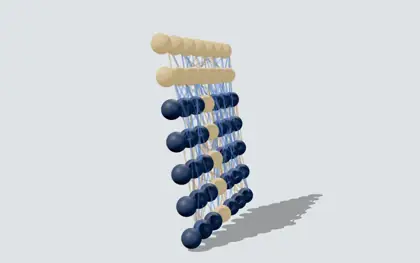
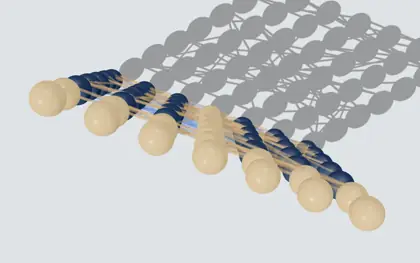
Description
Hopfield network (also called associative memory network, attractor network): A model network in which every neuron is connected to every other and memories are stored in the strengths of the connections. Shown part of a stored pattern, it settles into the whole of it. Published by John Hopfield in 1982. Size: a model: N on–off neurons, every pair connected. 3D model: custom builder "hop-net".
Where the triangles are
Materials
- neurons that are off (silent)MeshStandard · metal 0 · rough 0.5
- neurons that are on (firing)MeshStandard · metal 0 · rough 0.3
- positive weights: the two neurons agree in the stored patternMeshStandard · metal 0 · rough 0.4
- negative weights: the two neurons differ in the stored patternMeshStandard · metal 0 · rough 0.4
Motion
No animation is defined in this model's code: its builder returns a still model, with no clips, no update function and no time-driven material. In the app the part also appears in the lab station `brain/hopfield`, a live simulation; a station is a scene of its own, not part of this model, and is not captured here.
Specification
| Category | Science and biology / Biological processes |
|---|---|
| Kind | Processes |
| Collection | Processes |
| Repository | LAB |
| Version kept | Cell to Quantum, current source, 2026-11-11 |
| Confidence | high |
| Runtime | threejs |
| Bounding box | 19.3 × 21.0 × 11.5 scene units |
| Draw calls | 4 |
| Code | cell-journey/src/js/80-brain-18-hopfield.js + 3 files |
| Built and measured | 2026-11-24, three.js r160 |
Effects
More biological processes See all 80
 Ion gradientsProcesses
 Light adaptationProcesses
 Long-term potentiation (LTP)Processes
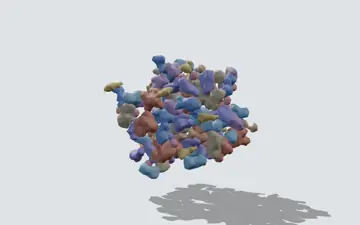 Macromolecular crowdingProcesses
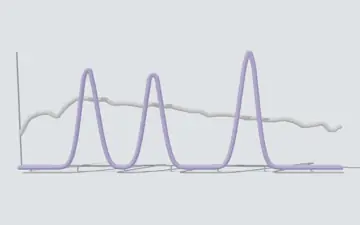 MetamerProcesses
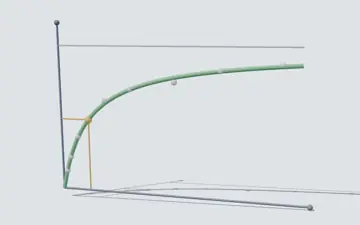 Michaelis–Menten kineticsProcesses
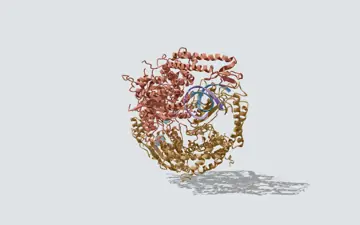 Mismatch repairProcesses
 MitosisProcesses
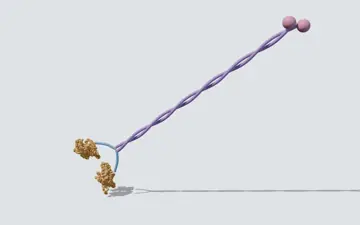 Motor-driven transportProcesses
 Neural networkProcesses
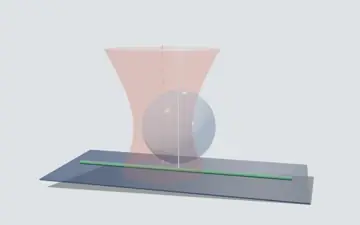 Optical trapProcesses
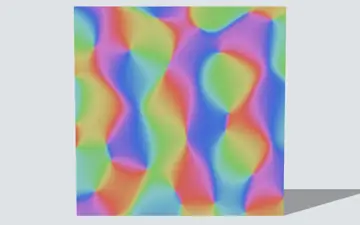 Orientation columnProcesses