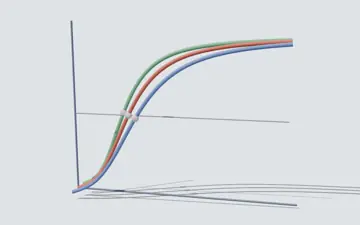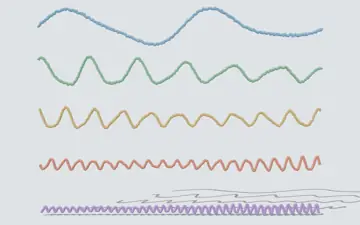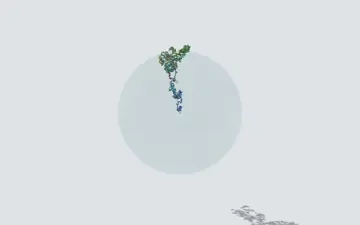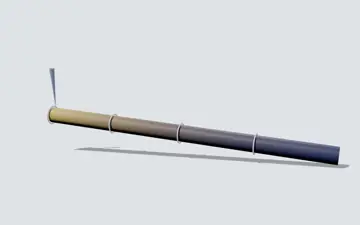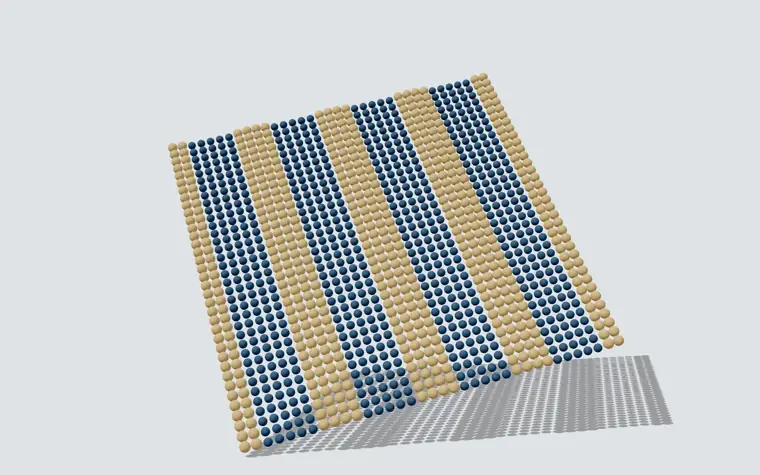
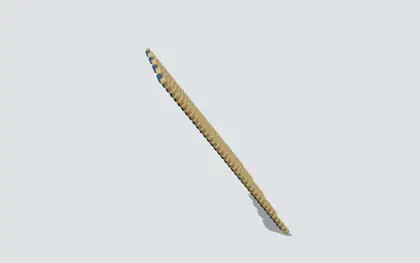
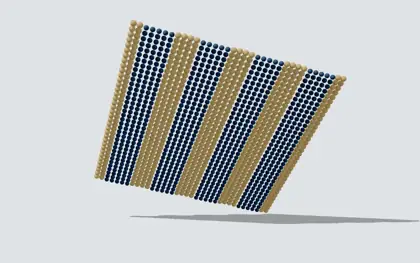
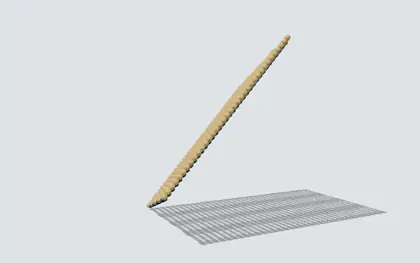
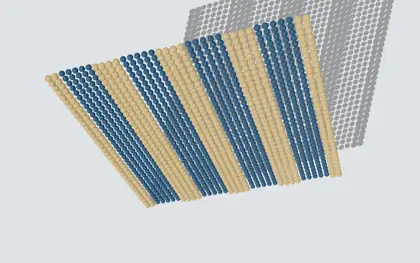
Description
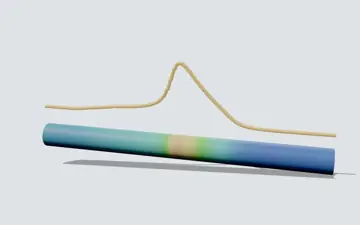
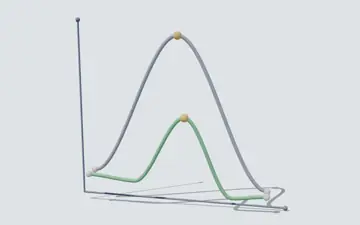
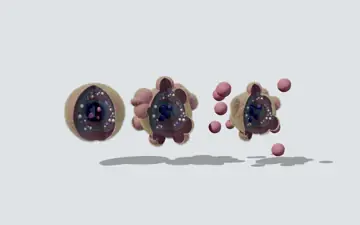
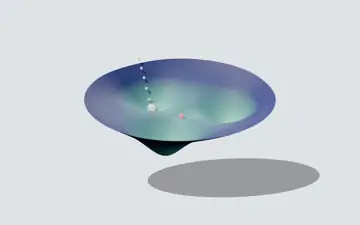
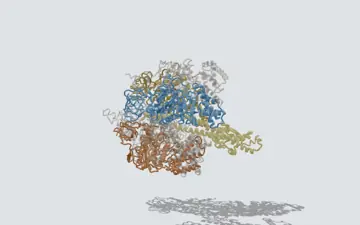
Turing pattern (also called reaction–diffusion pattern, activator–inhibitor pattern): A regular pattern of spots or stripes that appears by itself when two substances react and diffuse at different speeds. A short-range activator boosts itself; a long-range inhibitor holds it back at a distance. Predicted by Alan Turing in 1952.
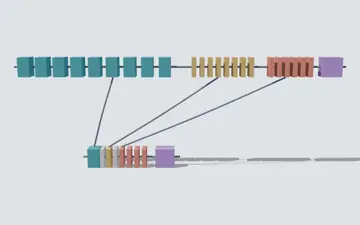
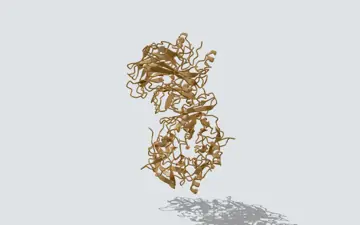
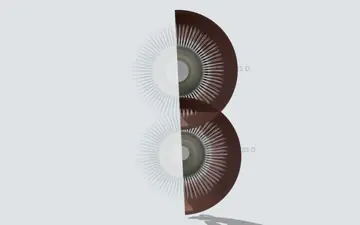
Size: spots and stripes from a few cells to centimetres apart. 3D model: custom builder "morph-turing".
Where the triangles are
Materials
- cells held down by the inhibitorMeshStandard · metal 0 · rough 0.6
- cells where the activator has wonMeshStandard · metal 0 · rough 0.45
Motion
No animation is defined in this model's code: its builder returns a still model, with no clips, no update function and no time-driven material. In the app the part also appears in the lab station `gene/morphogen`, a live simulation; a station is a scene of its own, not part of this model, and is not captured here.
Specification
| Category | Science and biology / Biological processes |
|---|---|
| Kind | Processes |
| Collection | Processes |
| Repository | LAB |
| Version kept | Cell to Quantum, current source, 2026-11-11 |
| Confidence | high |
| Runtime | threejs |
| Bounding box | 90.0 × 71.9 × 57.7 scene units |
| Draw calls | 2 |
| Code | cell-journey/src/js/74-gene-17-morphogen.js + 3 files |
| Built and measured | 2026-11-24, 0.2 s build, three.js r160 |